

Someone emails you asking what data you hold on them. You have thirty days to answer. Do you know where their details actually live?
Most small business owners I talk to don't. Not because they're careless, but because the information is scattered across an inbox, a spreadsheet, a booking tool, an accounting package and a WhatsApp thread. Data privacy compliance for small business owners isn't really about memorising laws. It's about being able to answer that one question without panicking.
And no, "we're too small to matter" stopped being a defence a long time ago. Regulators have fined sole traders. Consumer complaints don't check your headcount first.
Key Takeaways
- Size is not a shield: if you handle personal data, most privacy laws already apply to you.
- Compliance starts with a data map, not a legal document. Know what you collect and why.
- A privacy policy on your website is the floor, not the ceiling.
- Contracts with your suppliers (hosting, email, accounting) matter as much as your own policy.
- Answer consumer requests on time. Missed deadlines are the easiest failure to avoid.
- You can do the basics yourself for very little money; the expensive part is doing nothing until a complaint arrives.
Why small businesses can't quietly ignore data privacy
Here's the objection I hear constantly: "I've got nine clients and a Shopify store. Nobody's coming for me."
Possibly true. Enforcement tends to follow complaints and breaches, and a quiet business with a short client list rarely attracts either. But the risk isn't only the fine. It's the complaint from one angry customer, the breach that forces you to email everyone on your list, the enterprise client whose procurement team asks for your data processing agreement and walks away when you don't have one.
The real cost of losing a deal
If you sell to larger organisations, their supplier questionnaires now include privacy questions as standard. Do you have a documented data processing agreement? Where is data stored? Who has access? Fill that in badly and you're out, no matter how good your product is.
I once watched a two-person design studio lose a contract worth several months of revenue because they couldn't say where their project files were hosted. Not because they were doing anything wrong. They simply didn't know.
Does my small business need a privacy policy?
Yes. If your website collects anything from a visitor (a contact form, an email signup, analytics cookies, a checkout), you need one. Full stop.

The reasoning is straightforward: most privacy laws require you to tell people what you do with their data, and a policy is the standard way to do it. Some jurisdictions require it explicitly; in others it falls out of the general transparency obligation. Either way, a contact form with no policy is a visible gap that a customer, a supplier's auditor or a regulator can spot in seconds.
What a policy must actually say
- What data you collect (names, emails, payment details, IP addresses, cookie identifiers)
- Why you collect it, and the legal basis you're relying on
- Who you share it with (hosting provider, payment processor, email platform, accountant)
- How long you keep it, and what happens when you delete it
- How someone can access, correct or delete their data — and how to complain
Copy-pasting a template from a random blog is worse than useless. Those templates often name the wrong jurisdiction, promise rights you don't actually offer, and describe data flows you don't have. Write it to match what you genuinely do, then have someone who knows the field read it.
Does GDPR cover businesses?
Yes, and this catches people out constantly. GDPR applies to any organisation that offers goods or services to people in the EU or monitors their behaviour, regardless of where the business is based. A one-person shop in Austin selling to customers in France is covered by the same rules as a company in Lyon.
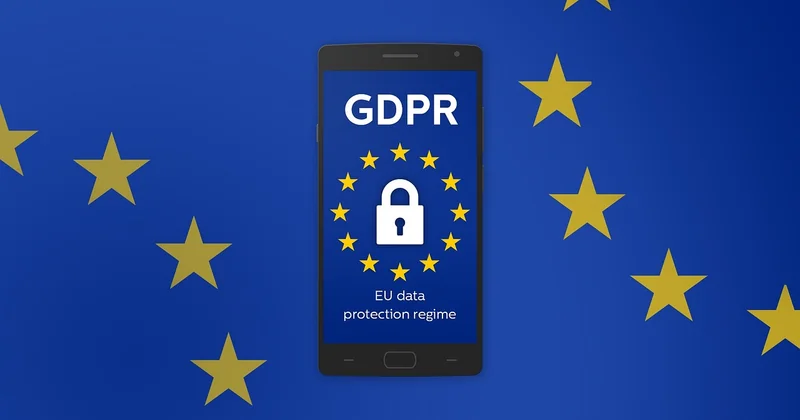
When GDPR applies to you
Two triggers, broadly. First, you're established in the EU (or UK, under the UK GDPR) and processing personal data in the course of business. Second, you're outside it but you actively target EU customers: pricing in euros, shipping there, advertising in those markets, running an EU-language site.
What it does not cover: a customer in Germany happening to find your site and buy something, with no effort on your part to reach that market. The line is about intent, and it's genuinely fuzzy at the margins. If EU customers are a meaningful slice of your revenue, assume you're in scope and act accordingly.
The practical consequences aren't dramatic for a well-run small business: a lawful basis for processing, transparency, a way to handle rights requests, and written contracts with processors. The horror stories come from ignoring it for years, not from the rules themselves.
What are the five pillars of data privacy compliance?
There's no single official list, but most frameworks boil down to five working areas. Treat them as the structure behind everything else in this article.

- Know your data — a map of what you collect, where it sits, who touches it.
- Lawful basis and consent — a defensible reason for each processing activity, and real consent where consent is the basis.
- Transparency — a policy people can read, plus honest notices at the point of collection.
- Security — access controls, encryption where it's practical, backups, and a plan for when something goes wrong.
- Individual rights — a workable process for access, correction, deletion and objection requests, with deadlines you can actually meet.
Where most small businesses fall short
Pillar one. Almost always. You cannot protect data you can't locate, and you can't answer a rights request if it's buried in three systems and someone's personal phone.
Start there. Open a spreadsheet and list every place personal data enters your business: the website form, the checkout, the phone, the inbox, the accounting tool, the CRM, the paper sign-in sheet at the door. Note what's collected and why. That list is your foundation, and it takes an afternoon, not a month.
What is GDPR vs CCPA?
They're different in shape. GDPR is a broad rights framework built on a lawful-basis test, with strict opt-in consent for most marketing uses. CCPA, California's law (as amended by CPRA), is narrower in scope but gives consumers strong opt-out rights, particularly around the "sale" and "sharing" of personal information.
| Aspect | GDPR | CCPA/CPRA |
|---|---|---|
| Who it protects | Anyone in the EU/UK | California residents |
| Who it covers | Any business targeting EU/UK individuals, wherever based | For-profit businesses doing business in California that meet thresholds (revenue, consumer volume, or data-selling share) |
| Marketing consent | Opt-in is the default for most uses | Opt-out of sale/sharing, with notice at collection |
| Rights | Access, rectification, erasure, portability, objection, restriction | Know, delete, correct, opt out of sale/sharing, limit use of sensitive data |
| Enforcement style | Regulator-led, with heavy fines | Regulator-led plus a private right of action for certain breaches |
The catch: the CCPA thresholds exclude a lot of genuinely small businesses. You may not be covered by California's law at all, which is precisely why vague "it applies to everyone" advice is unhelpful. Check the current thresholds against your own numbers, since they're adjusted periodically.
A practical starting checklist
Do these in order. The first three will take you a week of scattered afternoons; the rest is maintenance.
- Map your data — the spreadsheet above, updated quarterly
- Write or fix your privacy policy so it describes reality
- Audit your cookies and tracking — most small sites have analytics running and no consent mechanism where one might be needed
- Get data processing agreements from every supplier that touches personal data: hosting, email, payroll, booking, CRM
- Set up a rights-request inbox with a shared calendar reminder for the deadline
- Write a one-page breach response plan — who to call, how fast, what to draft
- Lock down access — two-factor authentication on every account, no shared passwords in a notes app, and remove former staff promptly
What it realistically costs
For most sole traders and micro-businesses, the basics are cheap: a few hundred euros or dollars a year for a decent policy generator or a one-off legal review, plus the time. A fractional DPO or a privacy consultant becomes worth it when you're dealing with large volumes, sensitive categories (health, children's data), or enterprise contracts. Cyber insurance is a separate conversation with your broker, and the prices vary enormously by sector.
The expensive scenario is the one where you do nothing for years and then a customer complains. That's when a quiet afternoon becomes a legal bill.
What to do this month
Privacy compliance rewards boring, incremental work and punishes dramatic catch-up projects. The business that has a messy but honest spreadsheet of its data flows is in far better shape than the one with a glossy policy nobody can explain.
So start with the email. The one from someone asking what you hold on them. If you can answer it accurately, within a day, without anyone's help, you're most of the way there. If you can't, you now know exactly where to begin — and it's a much smaller task than it looks from the outside.


